Thirteen years ago, my Ramadan was measured in sticky dates, spilled Sirap Bandung, and the rhythmic sound of small feet running through the hallway just as the Maghrib azan began. I had four daughters aged 2, 4, 6, and 8. Back then, I wasn’t just a mother; I was a shepherd, a storyteller, and a full-time “magic maker.”
My worship in those days looked nothing like the serene, scholarly retreat I had imagined. It was chaotic. I prayed with a toddler draped over my neck like a living scarf. I made sahur with a heavy hip and bleary eyes, trying to convince an 8-year-old that her half-day fast was the most heroic feat in history.
I remember feeling a constant, nagging guilt: a fear that I was “missing” the spirituality of the month because I was too busy wiping faces and cutting crusts. I thought I was failing at my own connection with the Divine because I couldn’t spend hours in the mosque.
Today, the house feels different. My daughters are 13, 15, 17, and 19. The “chaos” has transitioned into a beautiful, quiet hum of womanhood.
The 19-year-old is the one who wakes me for sahur now, her voice a gentle echo of the one I used to use for her. We sit in the kitchen, the three of us (my husband and eldest, because her sisters are in boarding school), and the conversations aren’t about “why we can’t eat candy”; they are about faith, identity, and the struggles of being a young woman in today’s world.
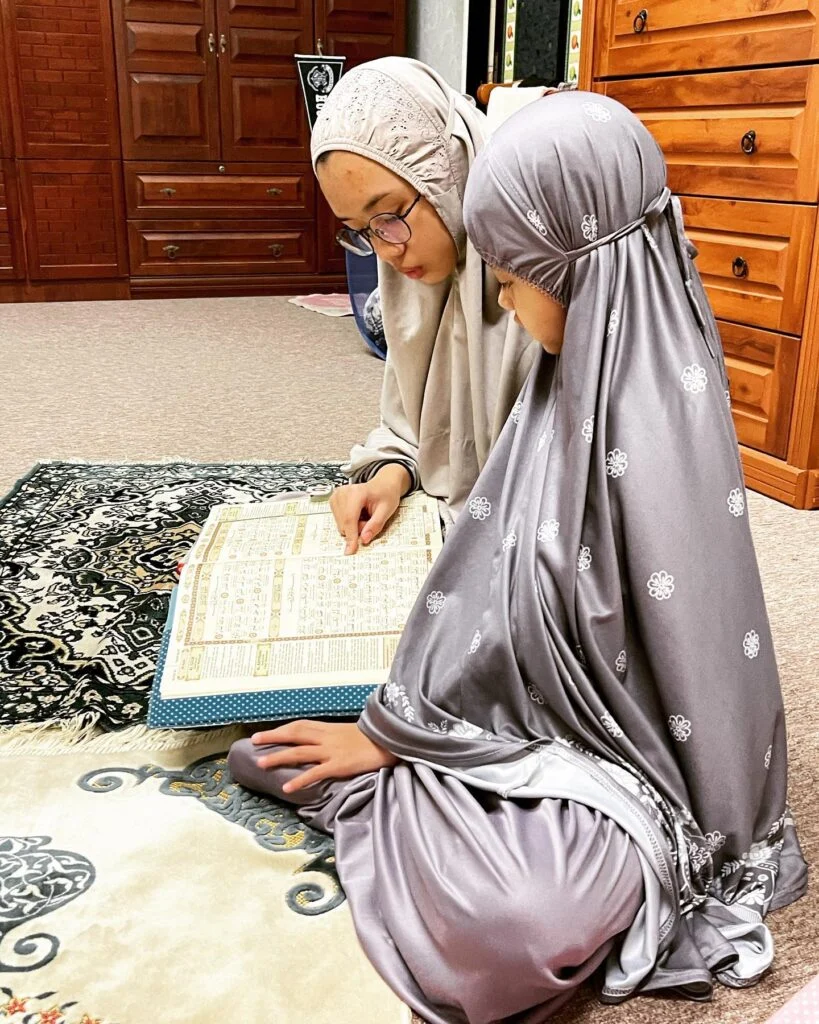
Standing in prayer next to them is the most profound spiritual experience I’ve ever known. When we line up for Tarawikh, I look to my left and right and see four young women who are taller than I, leaning into their own relationship with God. I realized that those “distracted” prayers years ago weren’t lost, they were the very foundation this house is built on. I wasn’t missing Ramadan back then; I was building it for them.
It is only now, as I watch my eldest navigate her own path, that I finally see my mother.
I think of her standing in her own kitchen decades ago, her hands smelling of onions and turmeric, her forehead damp with the heat of the stove while we played at her feet. I used to think she just “liked” to cook. I didn’t realize that for her, the kitchen was her musollah. I see the patience she had when I asked for a glass of water five minutes before Iftar. I see the strength she had to stay awake until Subuh just to make sure we were fed, even when her own body was trembling with exhaustion. I see the silent prayers she made for us while she stirred the pot, the same ones I now whisper for my girls.
I used to think my mother was just “Mom.” Now I see she was a warrior of the spirit. I reach for the phone more often this month just to tell her I understand now. I understand that her Ramadan wasn’t about the labour, but the love she poured into us.
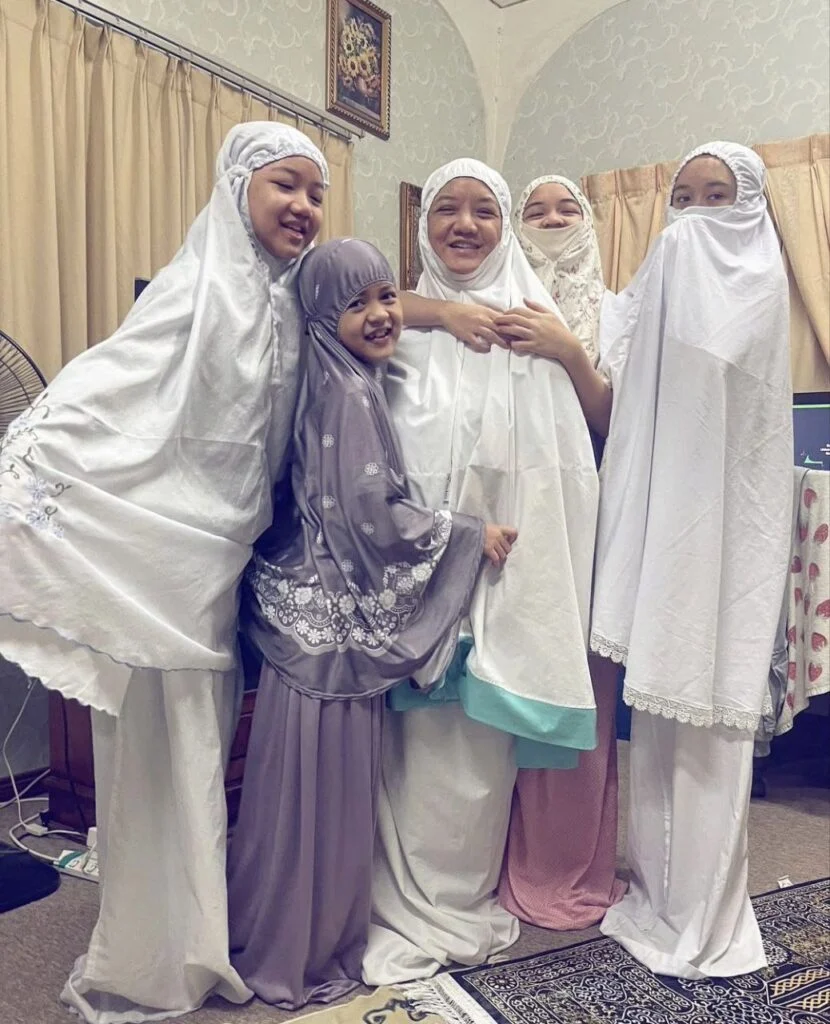
My daughters, at 13, 15, 17, and 19 are my greatest teachers. They have taught me that Ramadan is a cycle. I have moved from being the one who creates the atmosphere to the one who gets to rest within the atmosphere they help create. The sticky handprints on the walls are gone, replaced by the sound of four different voices reciting the Quran in different corners of the house. It is quieter, yes, but the silence is heavy with a different kind of holiness. I am no longer just raising children; I am walking alongside sisters in faith.
Written by: Naziah Nawawie / 11pm / 24 February 2026